22 Free Public Domain Images Sites

Alliance  ·  December 08

Explore 22 of the best free public domain image sites and unlock a library of high quality, copyright-safe visuals. Discover legal, budget-friendly photos and graphics you can use on your blog, website, and social media without the risk of infringement.


In a digital world driven by visual storytelling, compelling images are no longer a luxury—they are a necessity. For bloggers, marketers, and creators, the constant need for high-quality visuals for a blog, website, or social media feed is a significant challenge. The search is often a tightrope walk between restrictive budgets and the daunting risk of copyright infringement. The global stock images market, projected to hit $10.65 billion by 2029, underscores this immense demand, yet paying for every image isn’t feasible for everyone. This is where the power of copyright-free visuals comes into play, offering a legal, cost-effective, and creatively liberating solution.

The Quest for Visuals: Why Copyright-Free Images are Essential

  1. The Challenge of Engaging Content Creation
    Creating content that captures and holds audience attention requires a steady stream of fresh, relevant images. Sourcing these visuals legally can be a major hurdle. Relying on a quick web search is perilous, as most online images are protected by copyrights, and misuse can lead to severe legal and financial penalties. For creators, this creates a constant tension between the need for visual assets and the fear of violating copyright restrictions.
  2. Introducing the Solution: Public Domain and Creative Commons
    The solution lies in the vast and growing collections of public domain and Creative Commons licensed images. These are high-quality photographs, illustrations, and graphics that have been made available for public use without the traditional copyright limitations. They empower creators to enhance their work with stunning visuals without the associated costs or legal risks, leveling the playing field for content creation.
  3. What You’ll Discover in This Ultimate Resource
    This guide is more than just a list; it’s your comprehensive resource for navigating the world of copyright-free visuals. We will demystify the licenses that make these images free, introduce you to the best websites for sourcing them, and provide practical strategies for finding and using the perfect image for any project. You will gain the knowledge and confidence to use these invaluable resources effectively and ethically.
  4. Your Go-To General Resources for High-Resolution Public Domain Images
    Several large-scale platforms have become essential destinations for creators seeking a wide variety of high-quality, free-to-use images. These sites offer everything from professional stock photos to artistic illustrations.
1

Wikimedia Commons

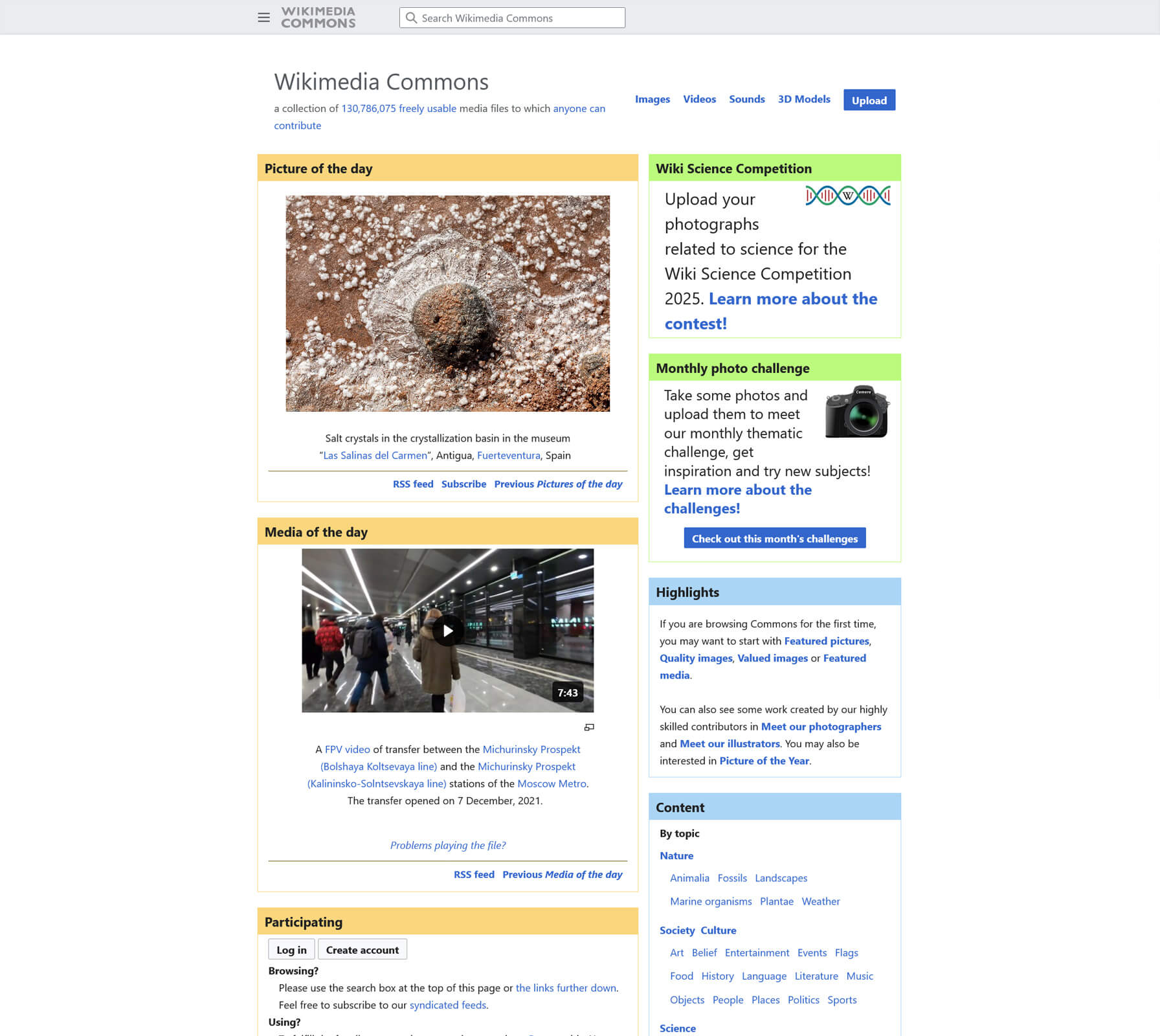
Wikimedia Commons is a huge free media repository with well over 130 million images, audio files, and videos under public domain or open licenses. It is especially strong for encyclopedic and cultural content, including contributions from many museums and archives. The site is operated by the nonprofit Wikimedia Foundation and populated and curated by a global community of volunteers.

Visit site Wikimedia Commons
2

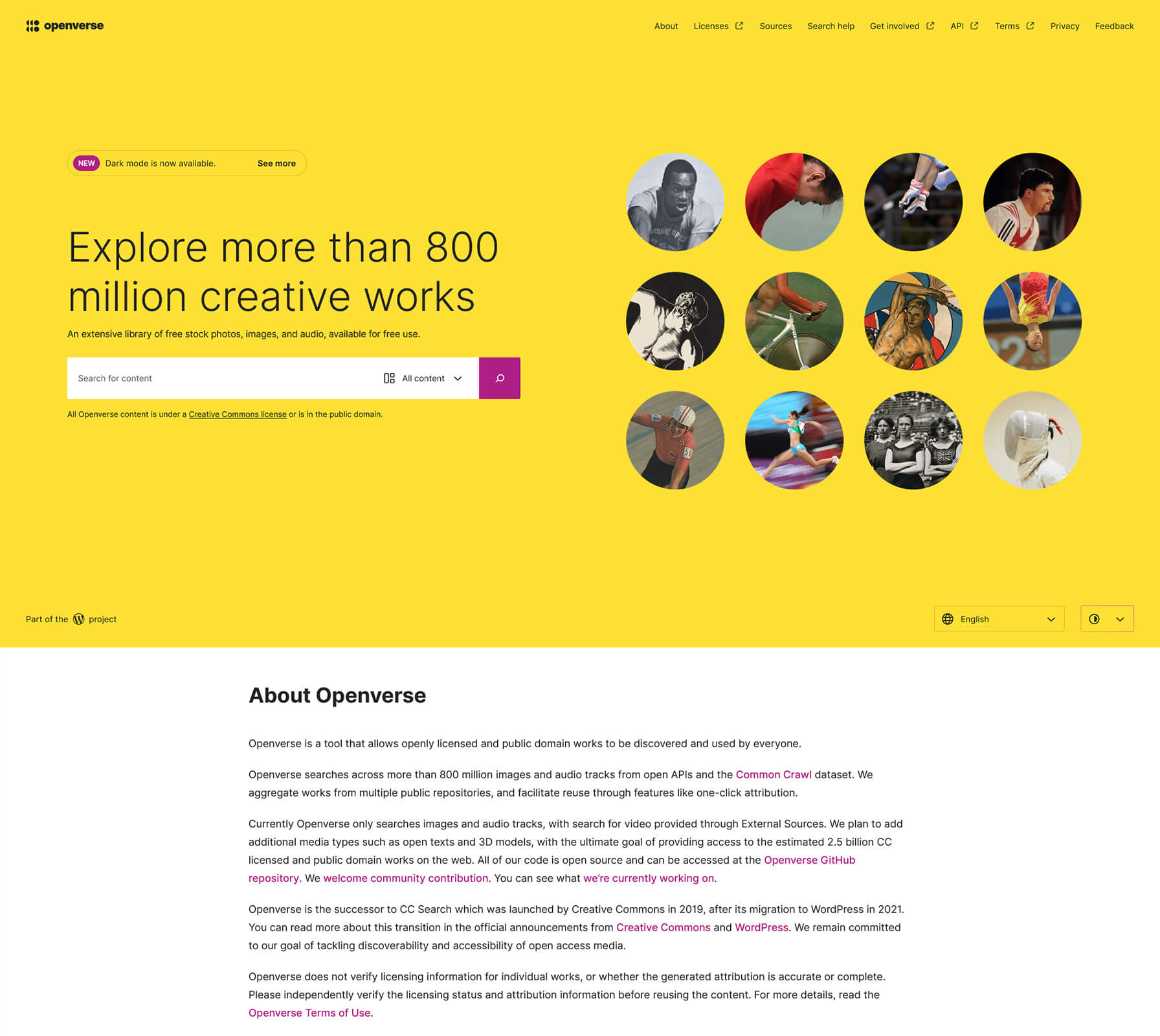
Openverse

Openverse is a search engine that aggregates more than 800 million openly licensed and public domain images and audio files from dozens of sources. It lets you filter by license type, use case, and source so you can reliably find media suitable for commercial reuse. Openverse is a WordPress project stewarded by the WordPress Foundation and developed by the broader WordPress open source community.

Visit site Openverse
3

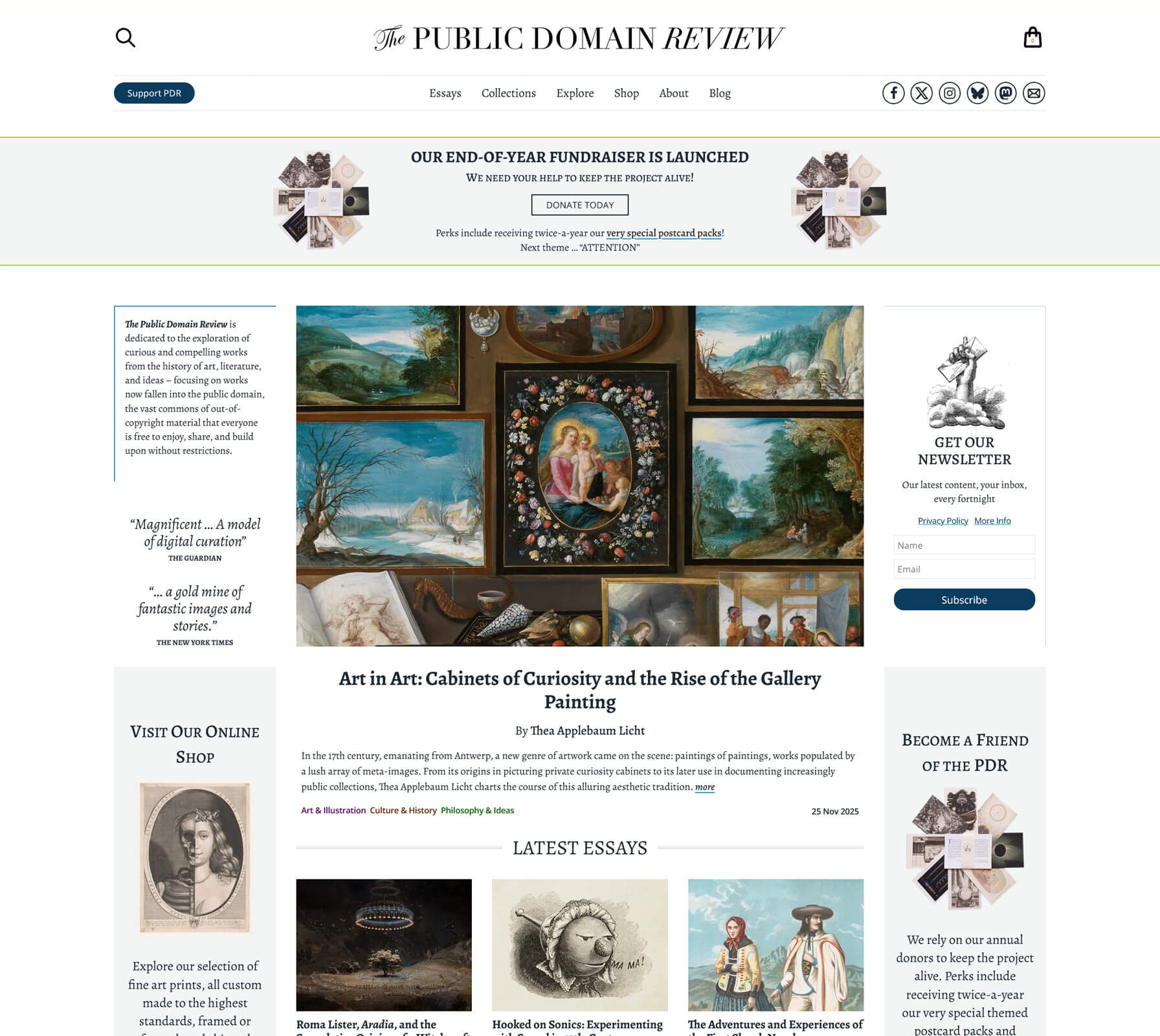
The Public Domain Review

The Public Domain Review curates public domain images, texts, films, and audio from libraries and archives, with a focus on unusual, historic, and scholarly material. Its image collections are small but very carefully selected and annotated, which is useful when you need context rather than generic stock imagery. The site is produced by The Public Domain Review Community Interest Company, an independent not for profit publisher that originally grew out of Creative Commons and Open Knowledge circles.

Visit site The Public Domain Review
4

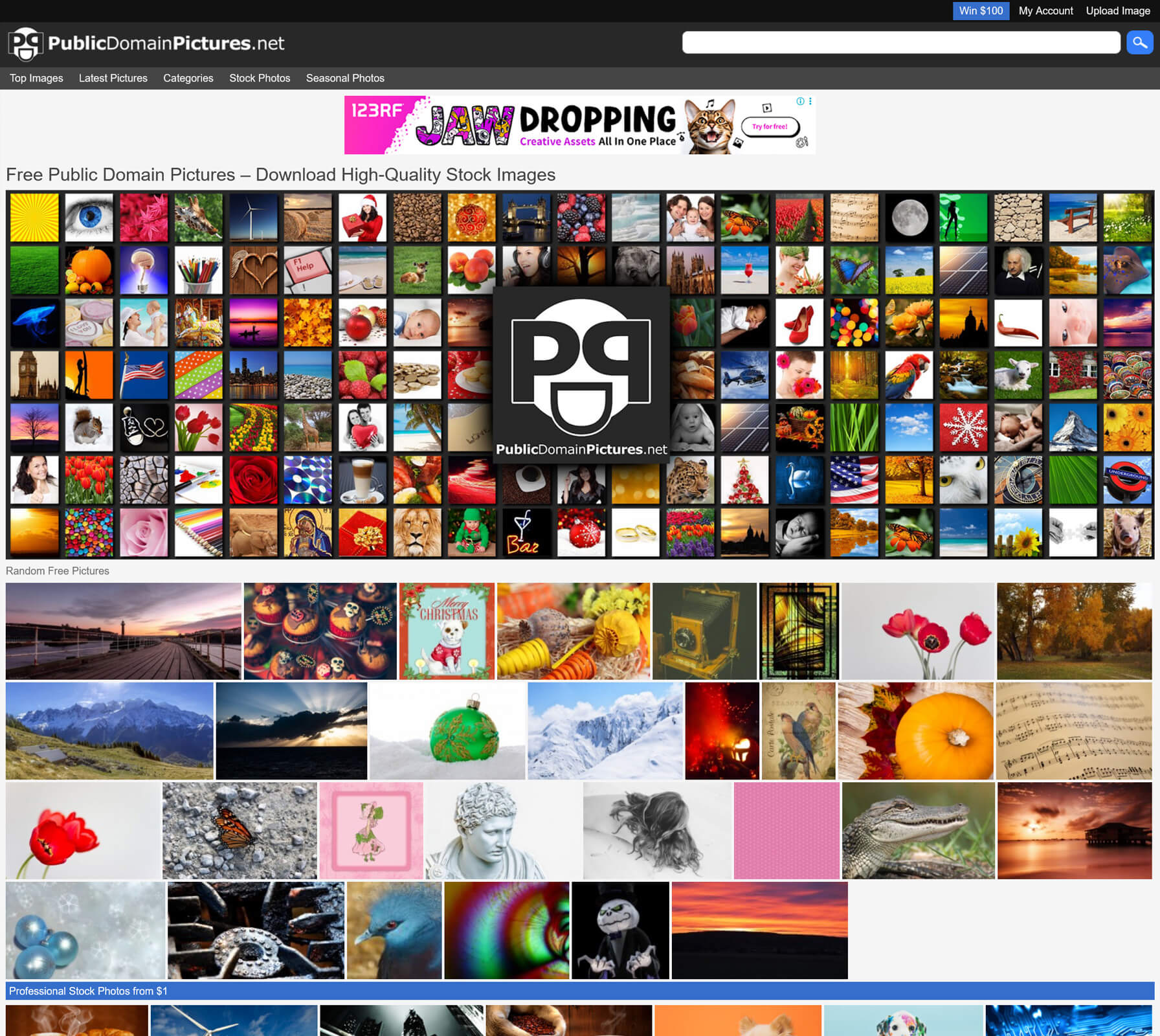
Public Domain Pictures

PublicDomainPictures.net offers hundreds of thousands of user submitted photos that contributors have released for unrestricted public domain use. It covers many everyday subjects such as landscapes, textures, backgrounds, and simple product-style shots. The site is operated by Bobek Ltd, a company registered in England and Wales that owns and maintains the PublicDomainPictures.net platform.

Visit site Public Domain Pictures
5

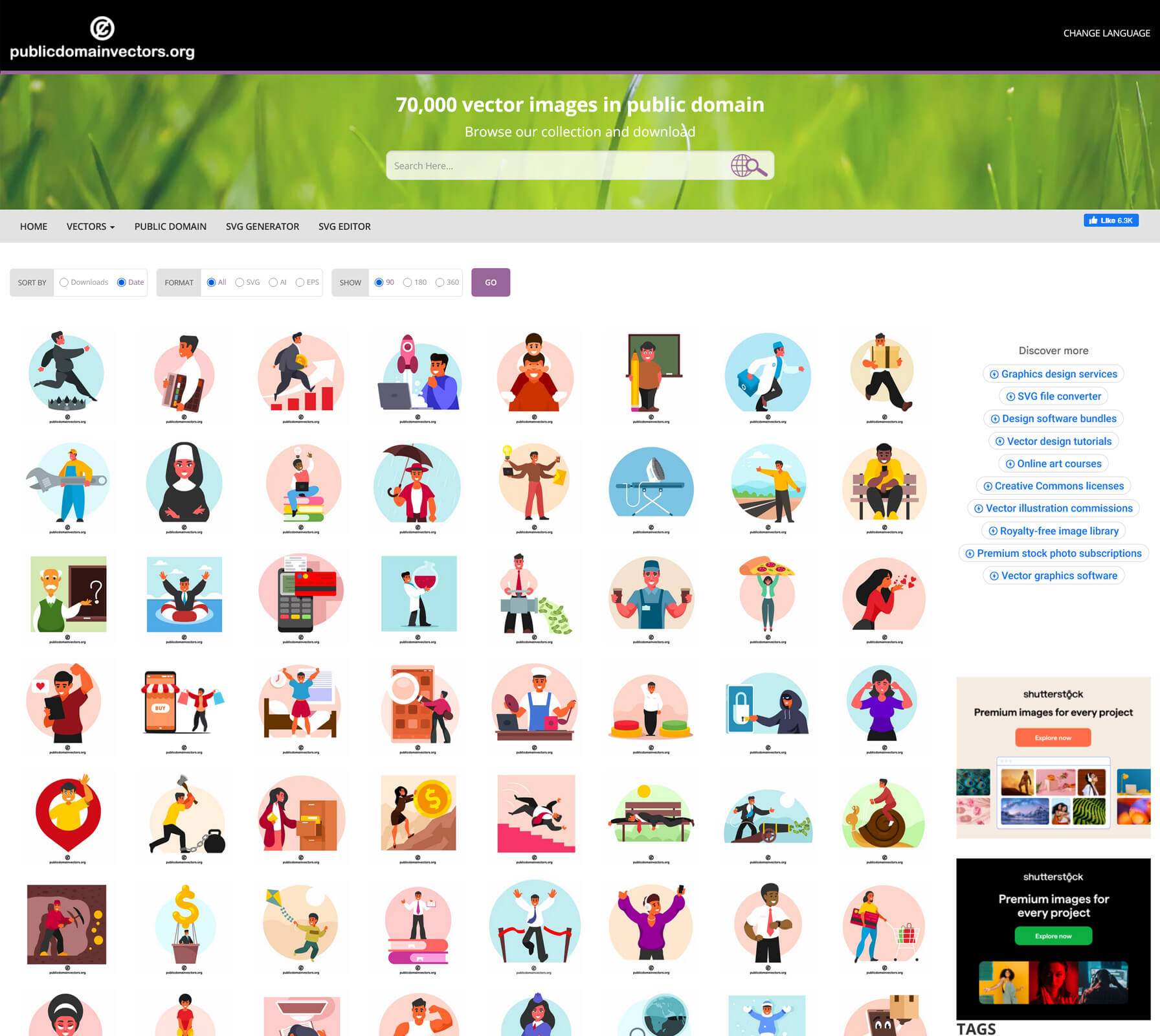
Public Domain Vectors

PublicDomainVectors.org specializes in vector clip art, icons, and illustrations whose uploaders have waived their rights to the extent possible under law. Files are downloadable as SVG, EPS, AI, and other vector formats, which makes them ideal for editing in design software. The site is run as PublicDomainVectors.org by its operators, who provide the platform and state that contributors dedicate their images to the public domain.

Visit site Public Domain Vectors
6

Openclipart

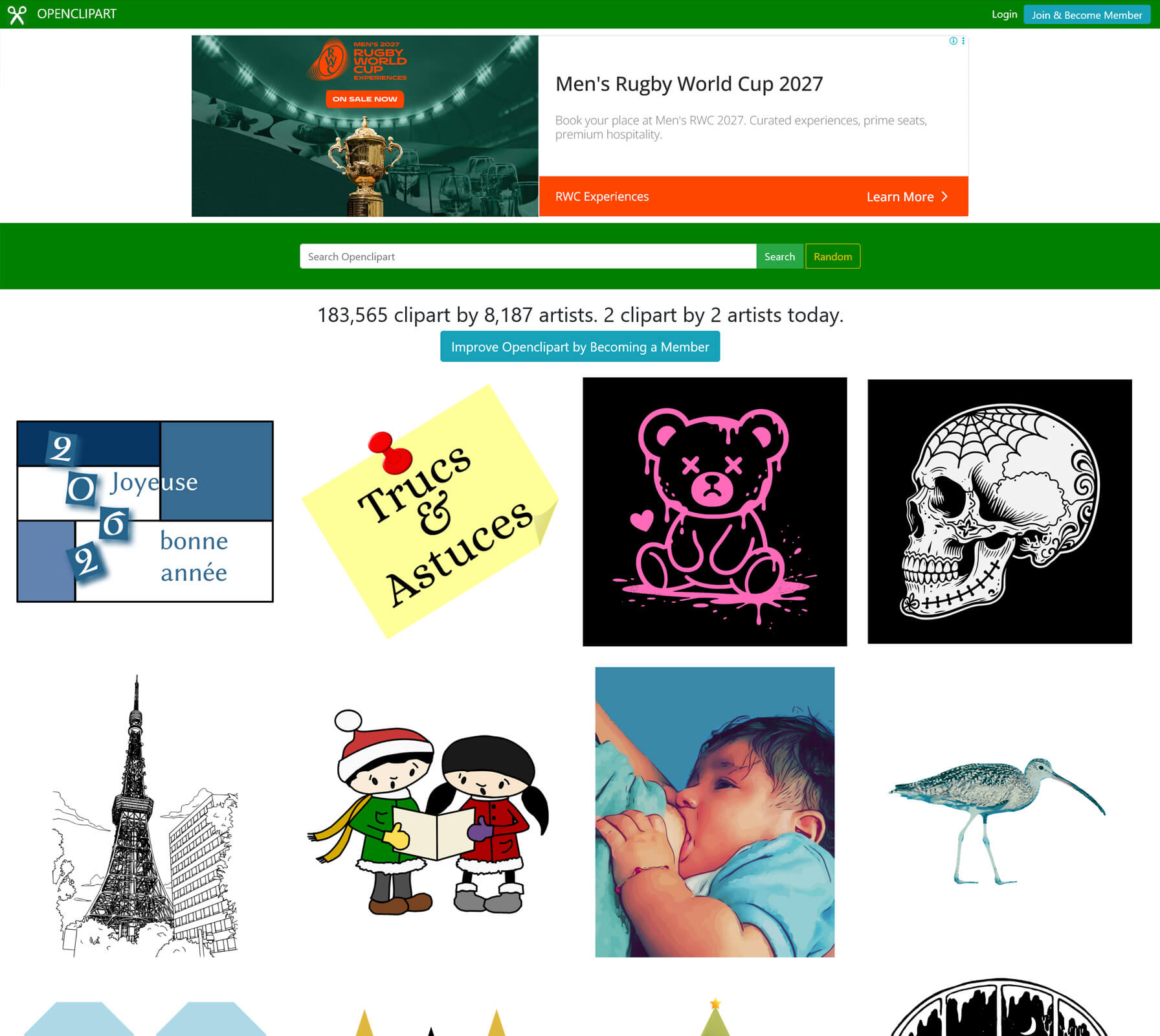
Openclipart is a long running repository of vector clip art that artists have explicitly placed in the public domain. It offers hundreds of thousands of simple icons, symbols, and illustrations suitable for infographics, interfaces, and educational materials. Openclipart is owned and hosted by the Fabricatorz Foundation and powered by a community that traces its roots to the early Open Clip Art Library founded by Jon Phillips and Bryce Harrington.

Visit site Openclipart
7

Rawpixel Public Domain Collection

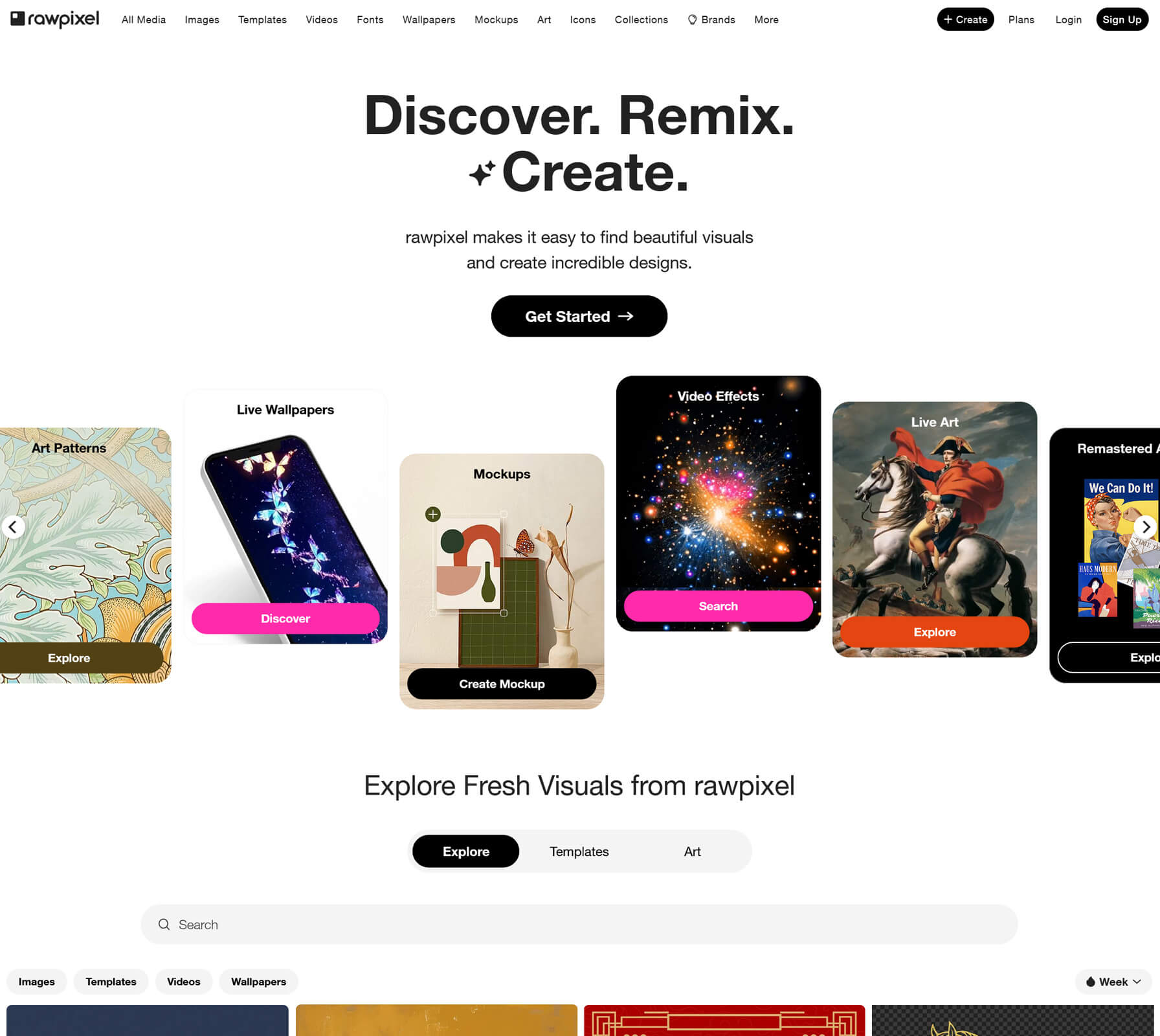
Rawpixel maintains a substantial public domain collection alongside its commercial stock library, including vintage book illustrations, Japanese prints, botanical plates, and historical engravings. You can filter by “public domain” within the Rawpixel interface to stay inside truly no-rights-reserved content. Rawpixel is operated by RAWPIXEL LTD, a UK based company with creative teams in the United Kingdom and Asia.

Visit site Rawpixel Public Domain Collection
8

Picryl

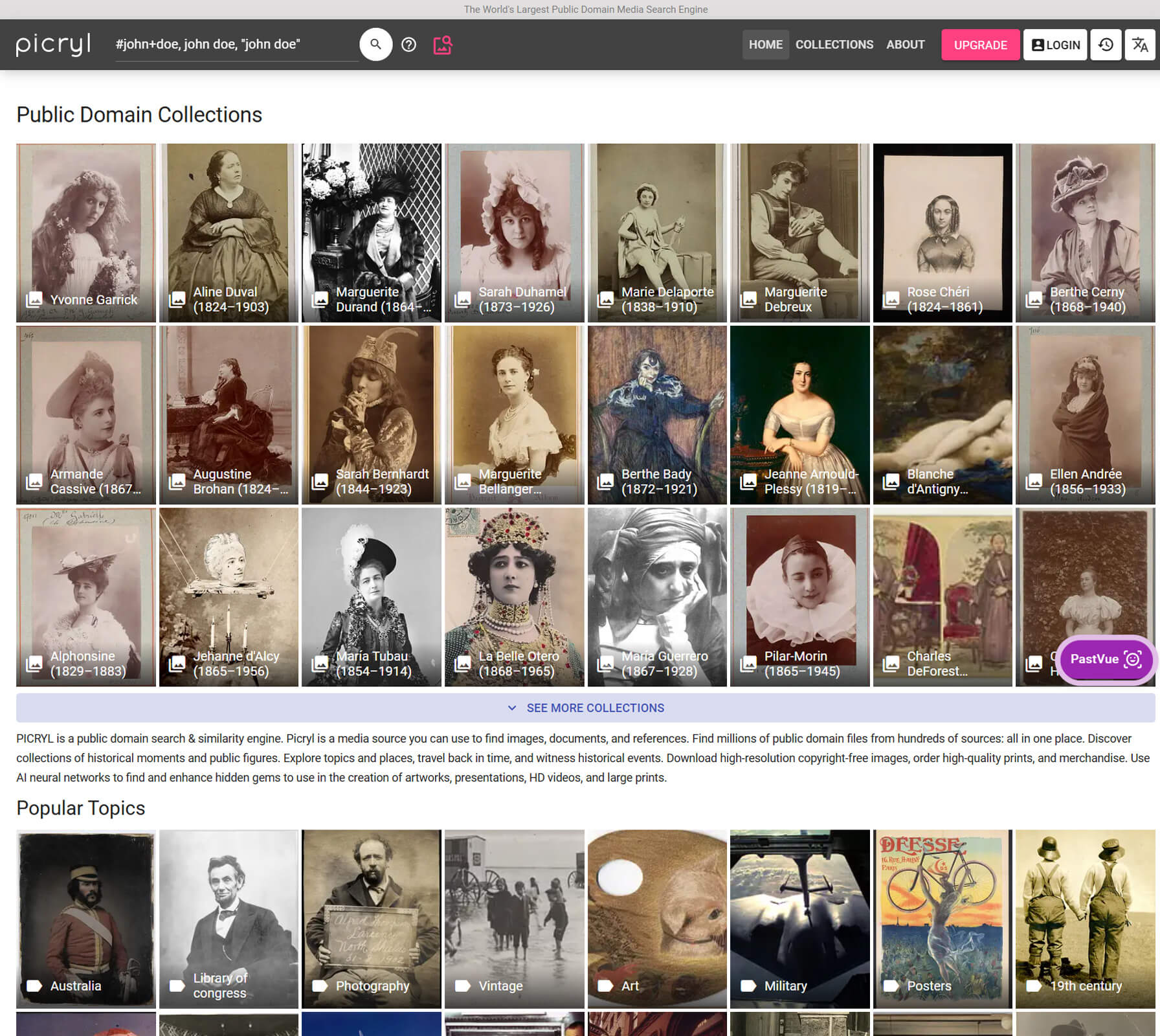
Picryl aggregates public domain images from many institutions and government archives into a single search platform. It is particularly strong for historical photographs, posters, and maps drawn from sources such as the Library of Congress and other national libraries. Picryl is developed and operated by GetArchive LLC, which markets it as one of the largest public domain image search engines available.

Visit site Picryl
9

Museo

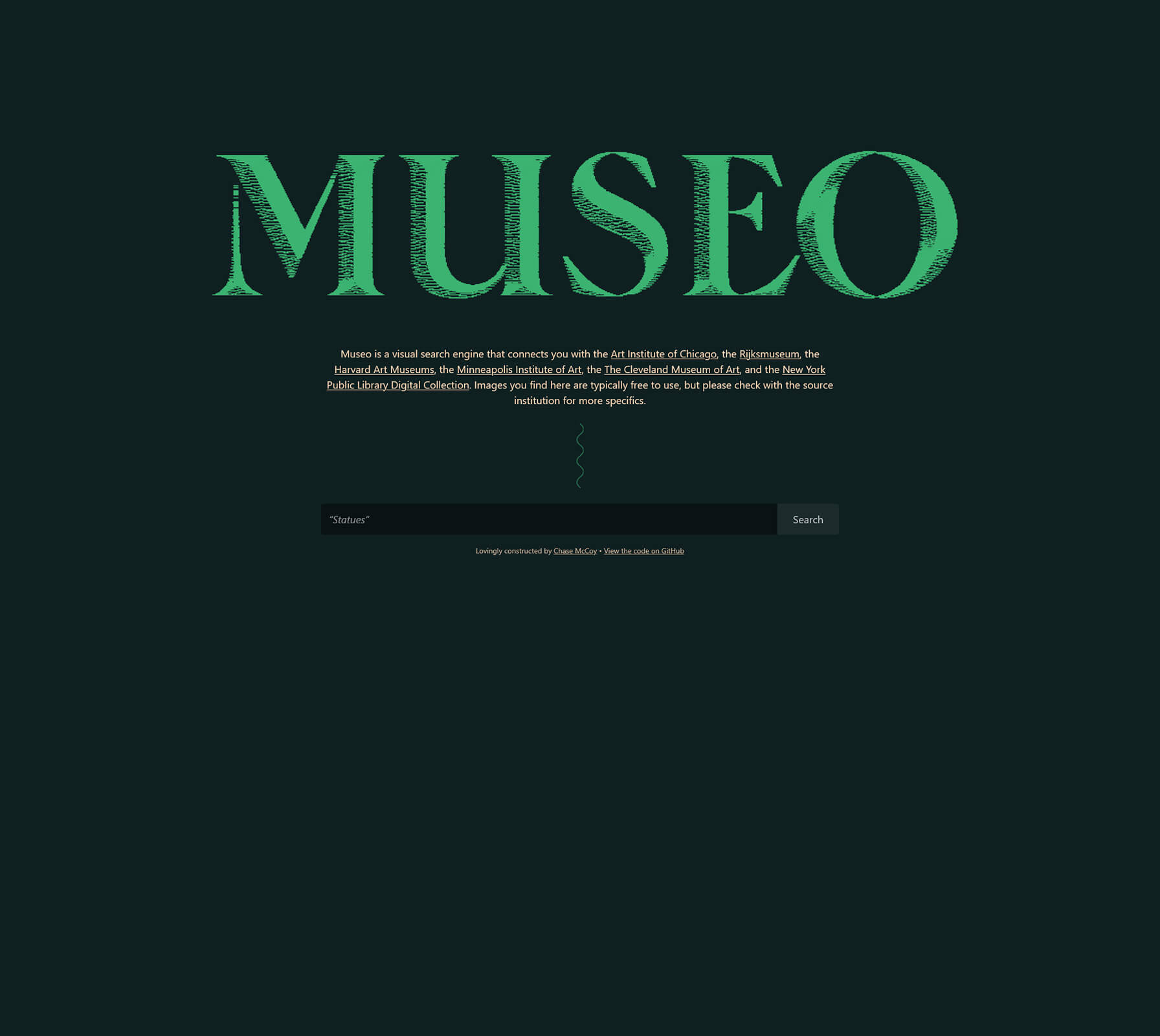
Museo is a visual search engine that connects directly to open access image APIs from museums such as the Art Institute of Chicago, Rijksmuseum, Harvard Art Museums, the Cleveland Museum of Art, and the New York Public Library. It returns high quality art and historical imagery that is typically public domain or under very permissive licenses, with links back to the source institution for license confirmation. Museo is an independent, open source project run by a small developer team that aggregates these museum collections into one clean, ad free interface.

Visit site Museo
10

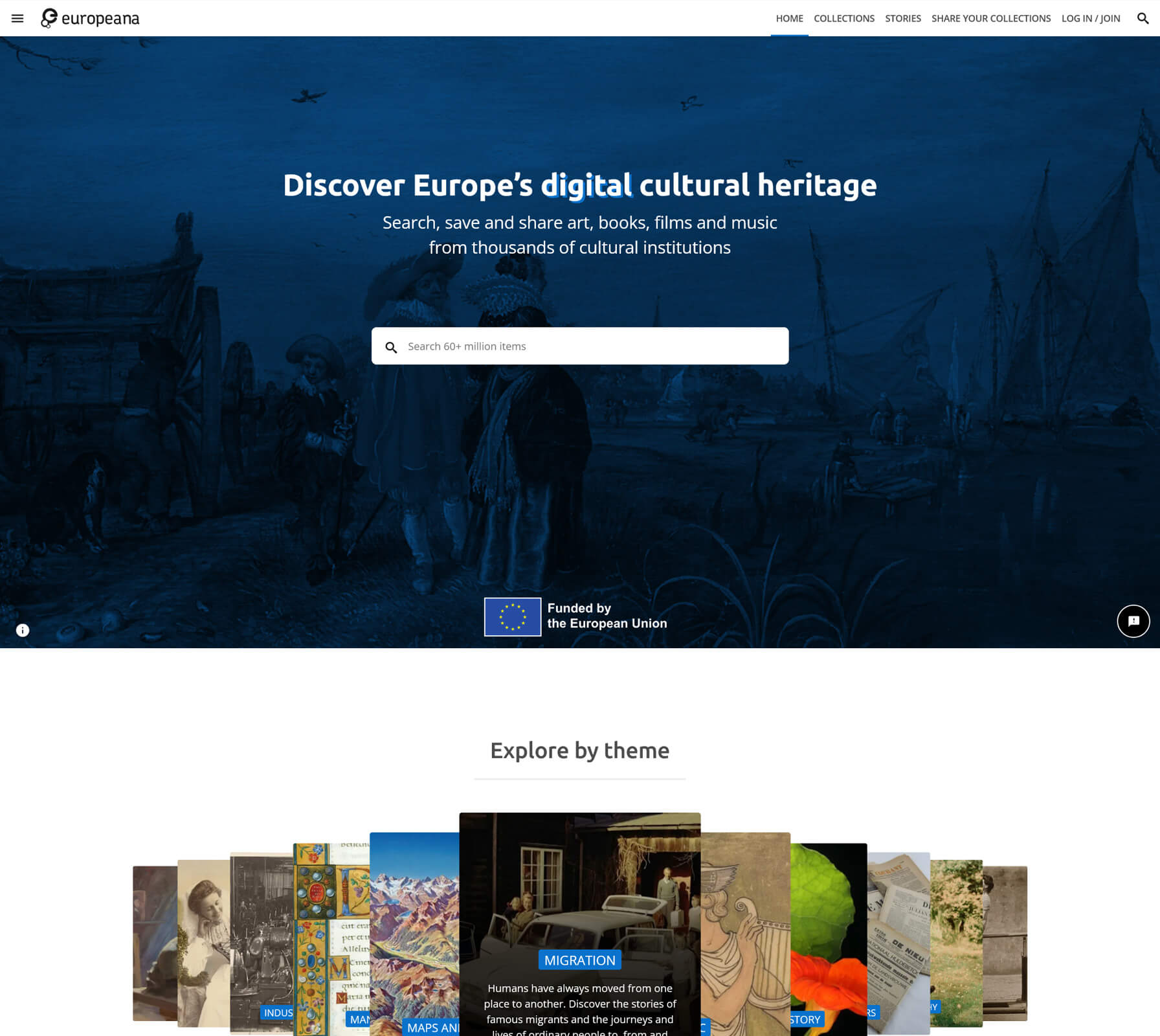
Europeana

Europeana is the European Union’s central digital portal for cultural heritage, aggregating tens of millions of records from museums, archives, and libraries across Europe. Its search tools allow you to restrict results to public domain or CC0 images, which is essential when you need content that is completely free to reuse. The platform is operated by the Europeana Foundation under contract with the European Commission, in partnership with a network of national and domain aggregators.

Visit site Europeana
11

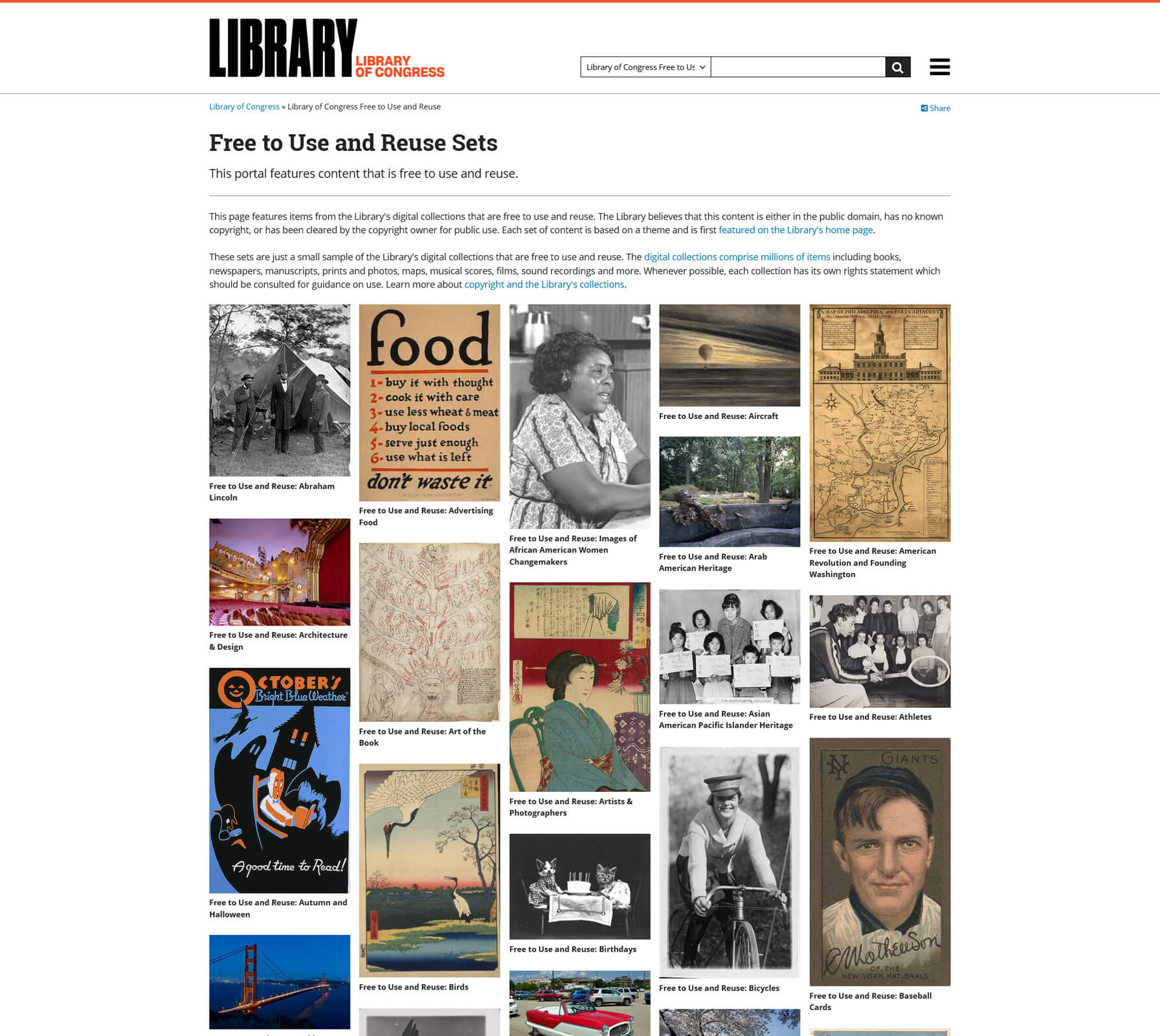
Library of Congress “Free to Use and Reuse” Collections

The Library of Congress offers Free to Use and Reuse sets that highlight images, posters, maps, and other items whose rights have been cleared for broad reuse. These curated sets sit on top of a much larger digital collections environment that includes millions of digitized items documenting U.S. history and culture. The site and the rights statements are managed by the Library of Congress, which is the national library of the United States and the largest library in the world.

Visit site Library of Congress “Free to Use and Reuse” Collections
12

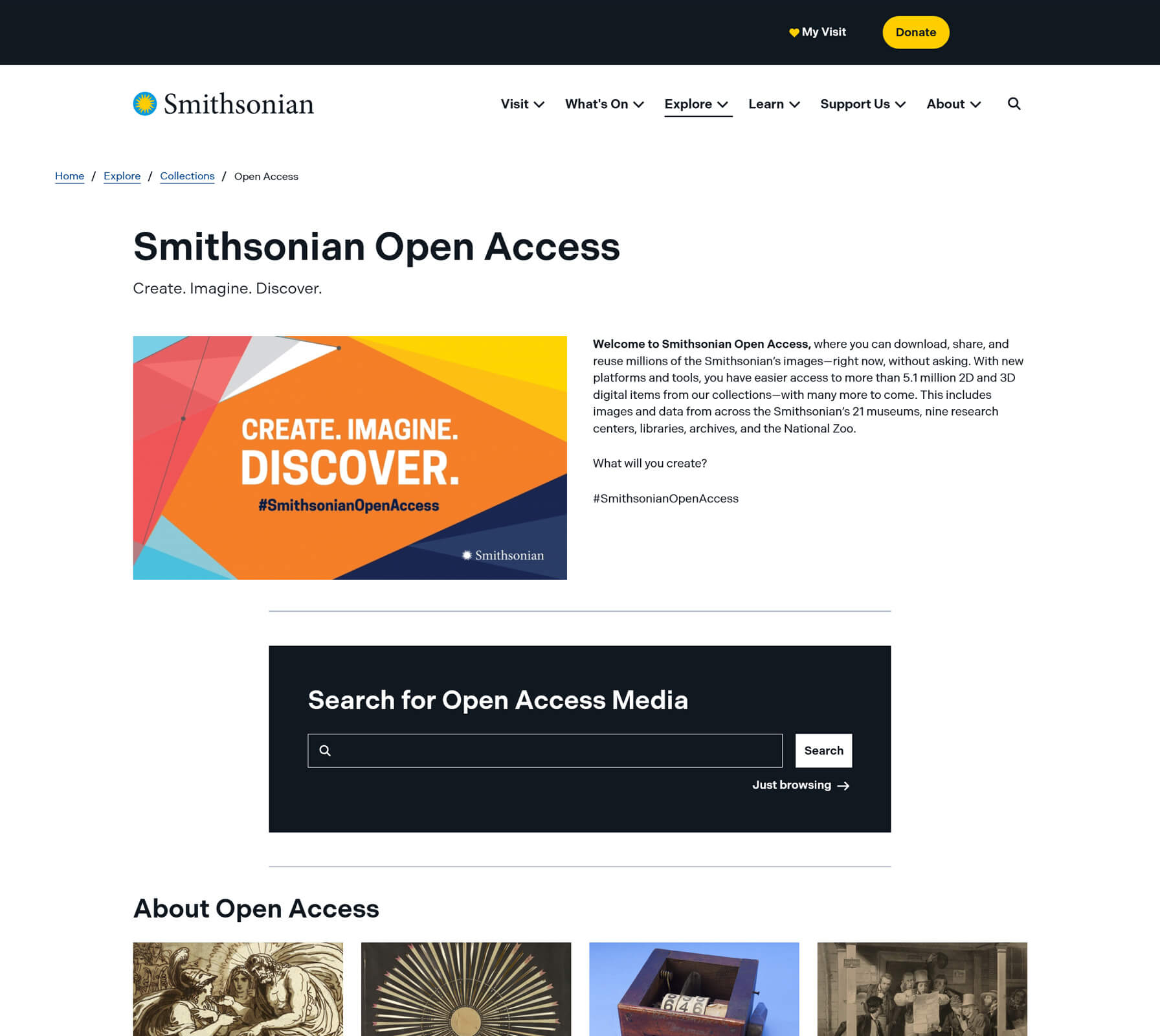
Smithsonian Open Access

Smithsonian Open Access provides more than five million 2D and 3D digital items that the Smithsonian has dedicated to the public domain under CC0. The collection covers art, science, design, history, and culture from 19 museums, nine research centers, and the National Zoo, and all open access items can be downloaded and reused without permission. The initiative is managed centrally by the Smithsonian Institution as part of its digital strategy, and it explicitly uses the Creative Commons Zero public domain tools.

Visit site Smithsonian Open Access
13

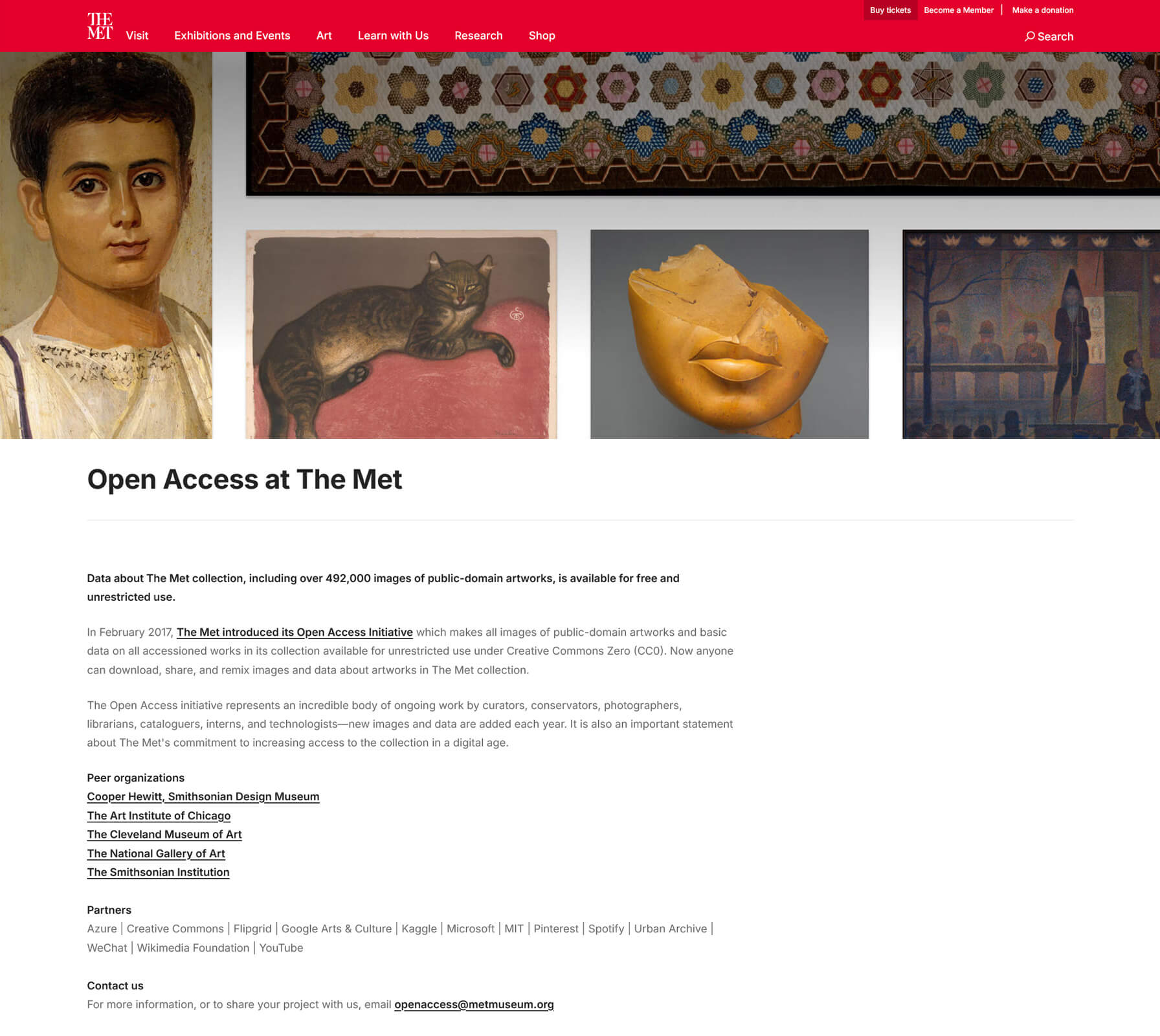
The Metropolitan Museum of Art Open Access

The Met’s Open Access program lets you download high resolution images of hundreds of thousands of artworks whose images are in the public domain. You can filter the online collection to show only Open Access items, and those images can be used, remixed, and shared for any purpose, including commercial projects. The program is operated by The Metropolitan Museum of Art in New York and uses a CC0 dedication for its public domain images.

Visit site The Metropolitan Museum of Art Open Access
14

Rijksmuseum Collection Online / Rijksstudio

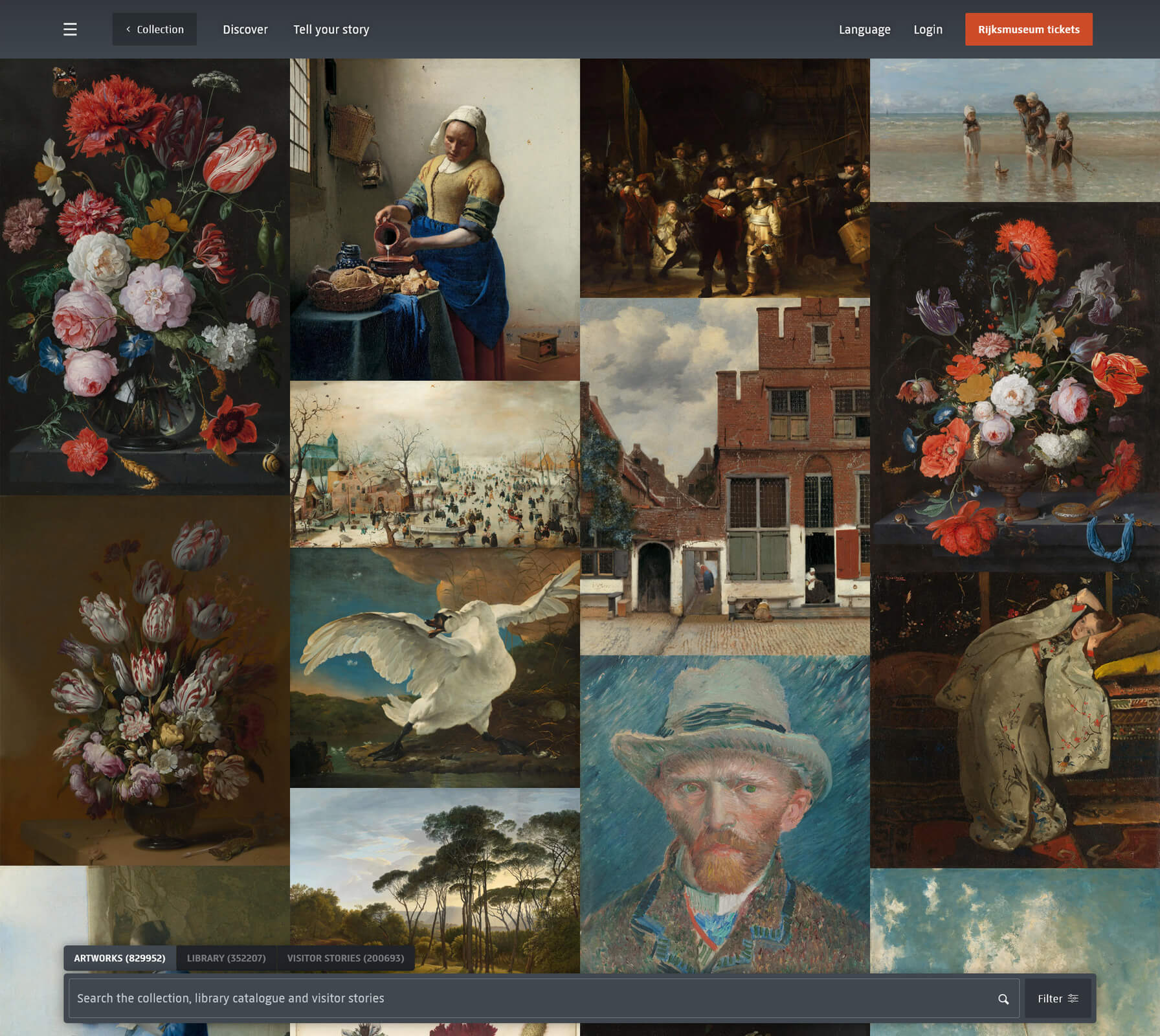
Rijksmuseum’s Collection Online and its Rijksstudio feature give you access to high resolution images of Dutch Golden Age paintings, prints, decorative arts, and more. Many of these works are in the public domain and can be downloaded in very large formats suitable for print and design projects. The digital collection and open access policy are administered by the Rijksmuseum in Amsterdam, which has put hundreds of thousands of items online.

Visit site Rijksmuseum Collection Online / Rijksstudio
15

National Gallery of Art (Washington) Open Access

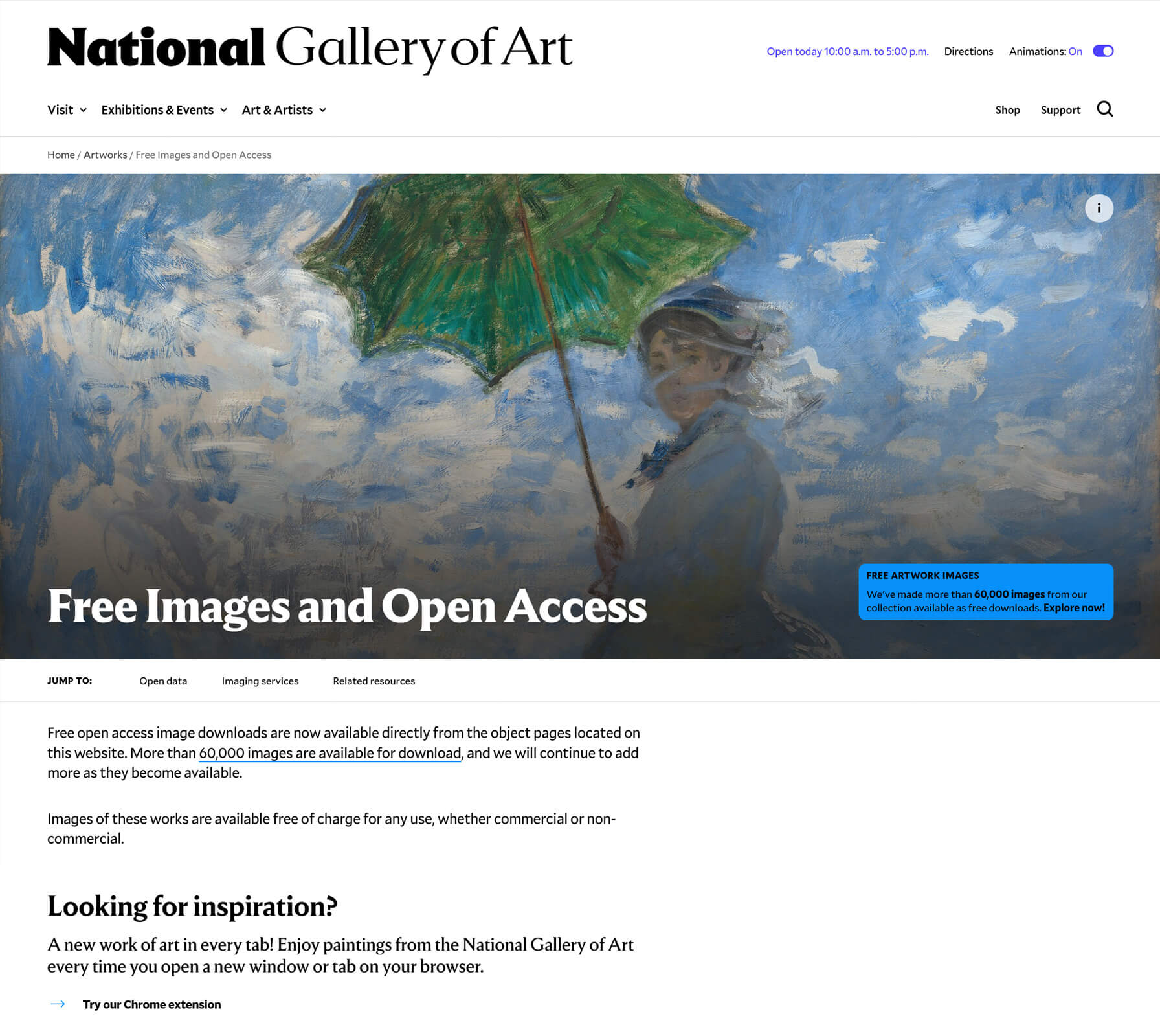
The National Gallery of Art in Washington, DC provides an Open Access program that includes hundreds of thousands of high resolution images of works in the public domain. These files can be downloaded without registration and used freely, including for commercial purposes. The open access initiative is managed by the National Gallery of Art, which also shares many of these images to Wikimedia Commons to broaden reuse.

Visit site National Gallery of Art (Washington) Open Access
16

Art Institute of Chicago Open Access

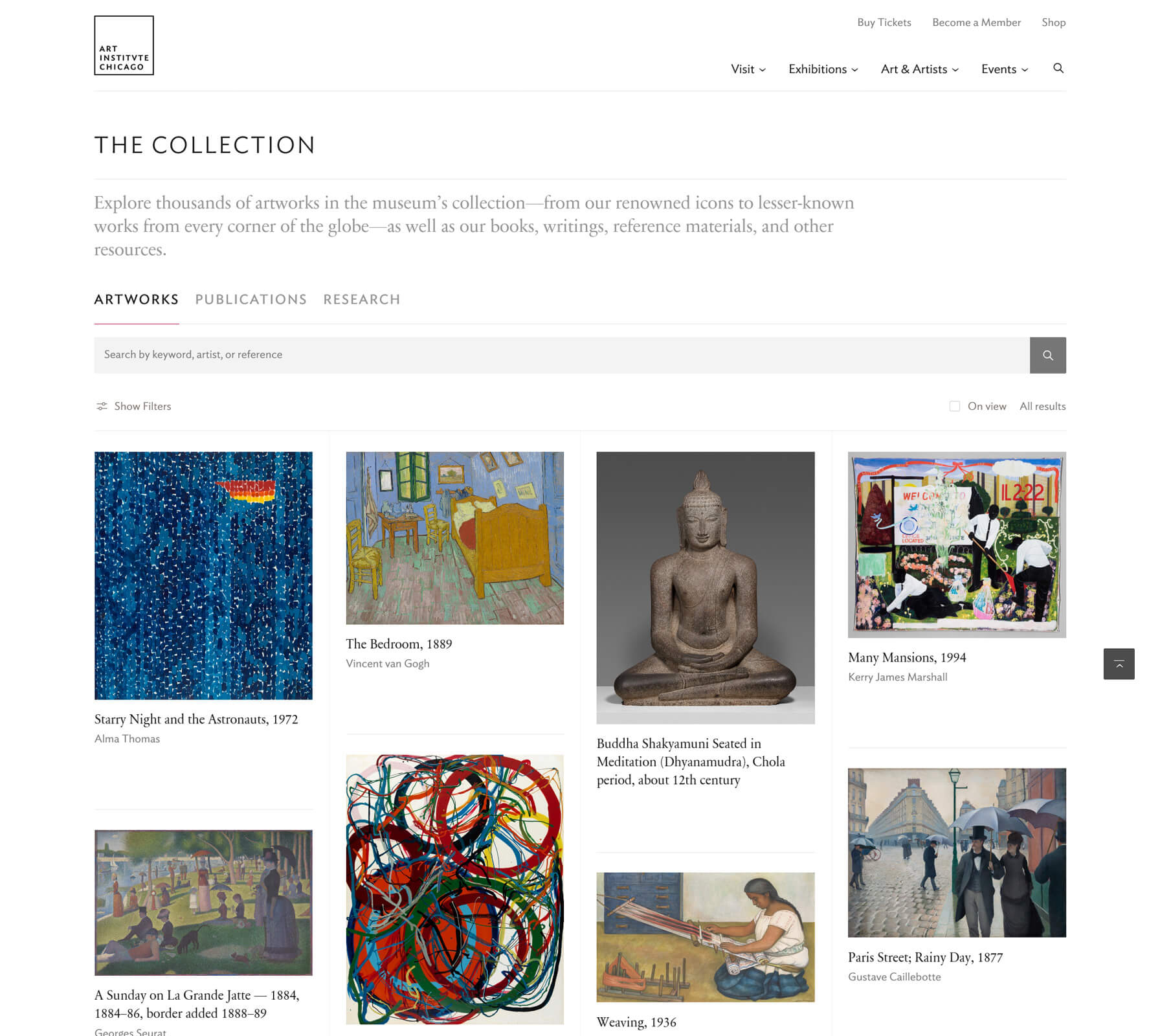
The Art Institute of Chicago marks certain works in its online collection as public domain and makes high resolution files available for download under CC0. You can filter the collection by public domain status, making it easy to see which images are truly unrestricted. This open access policy is administered by the Art Institute of Chicago as part of its broader digital collections program.

Visit site Art Institute of Chicago Open Access
17

Cleveland Museum of Art Open Access

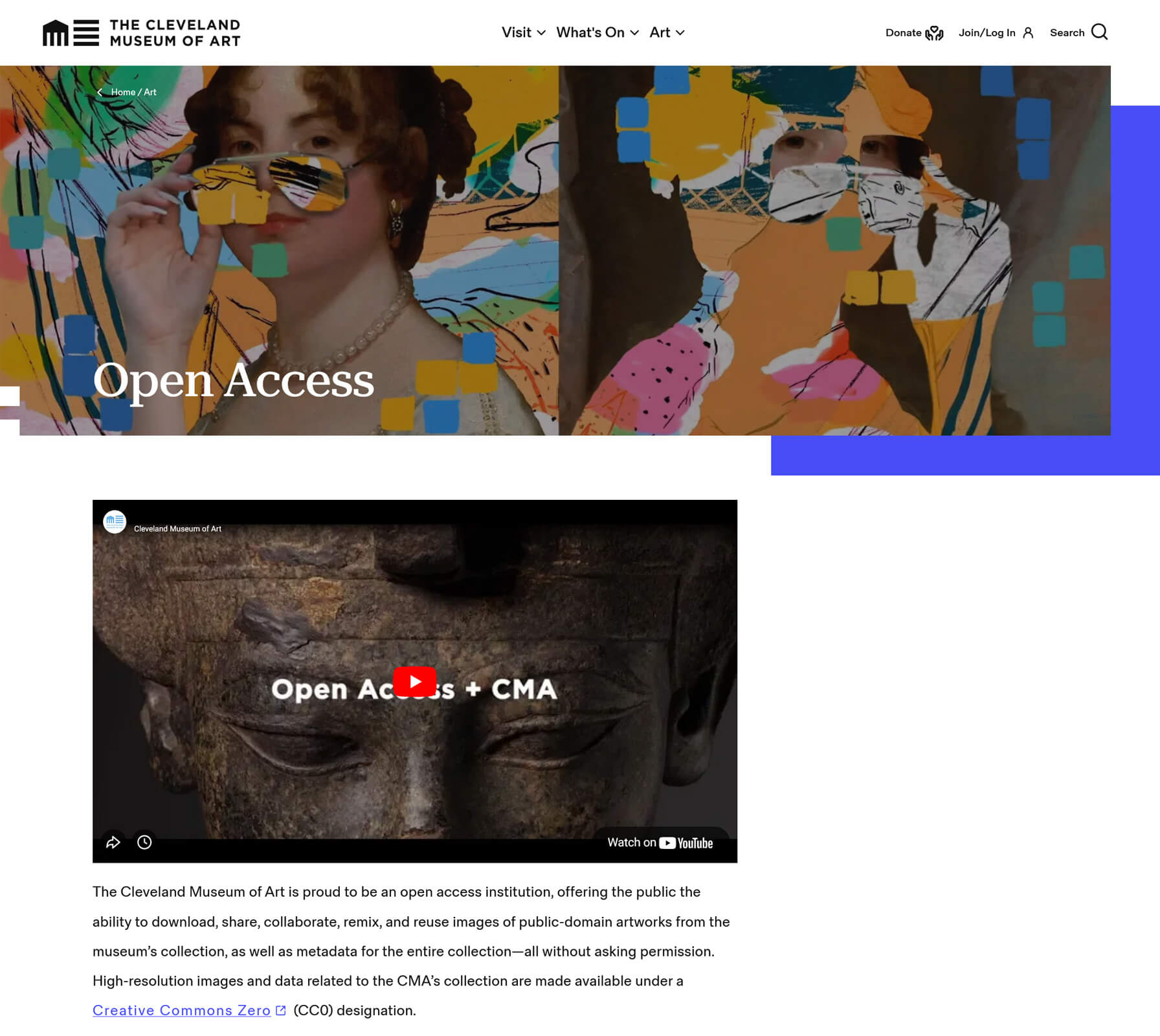
The Cleveland Museum of Art offers an Open Access program that makes high resolution images and metadata for a large portion of its collection available for unrestricted use. Open access items are clearly labeled and can be freely copied, modified, and commercialized. The program is run by the Cleveland Museum of Art, a major U.S. institution with a globally significant collection and a strong digital engagement strategy.

Visit site Cleveland Museum of Art Open Access
18

New York Public Library Digital Collections (Public Domain)

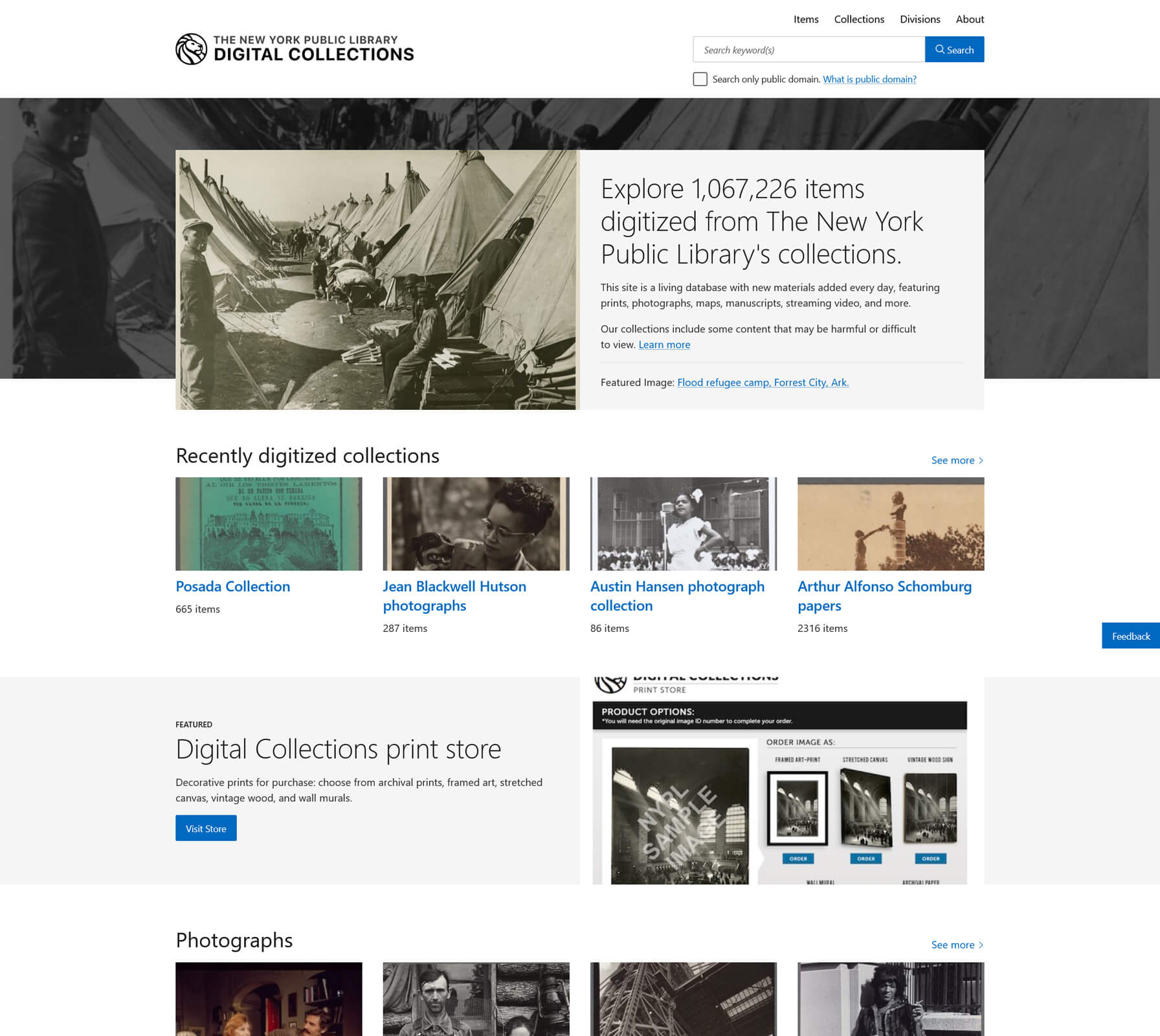
The NYPL Digital Collections include hundreds of thousands of items that the library has identified as public domain, from photographs and maps to illustrated books and posters. There is a dedicated view for public domain items, which can be downloaded in high resolution without sign-in. The site is operated by the New York Public Library, one of the largest public library systems in the United States.

Visit site New York Public Library Digital Collections (Public Domain)
19

DigitaltMuseum

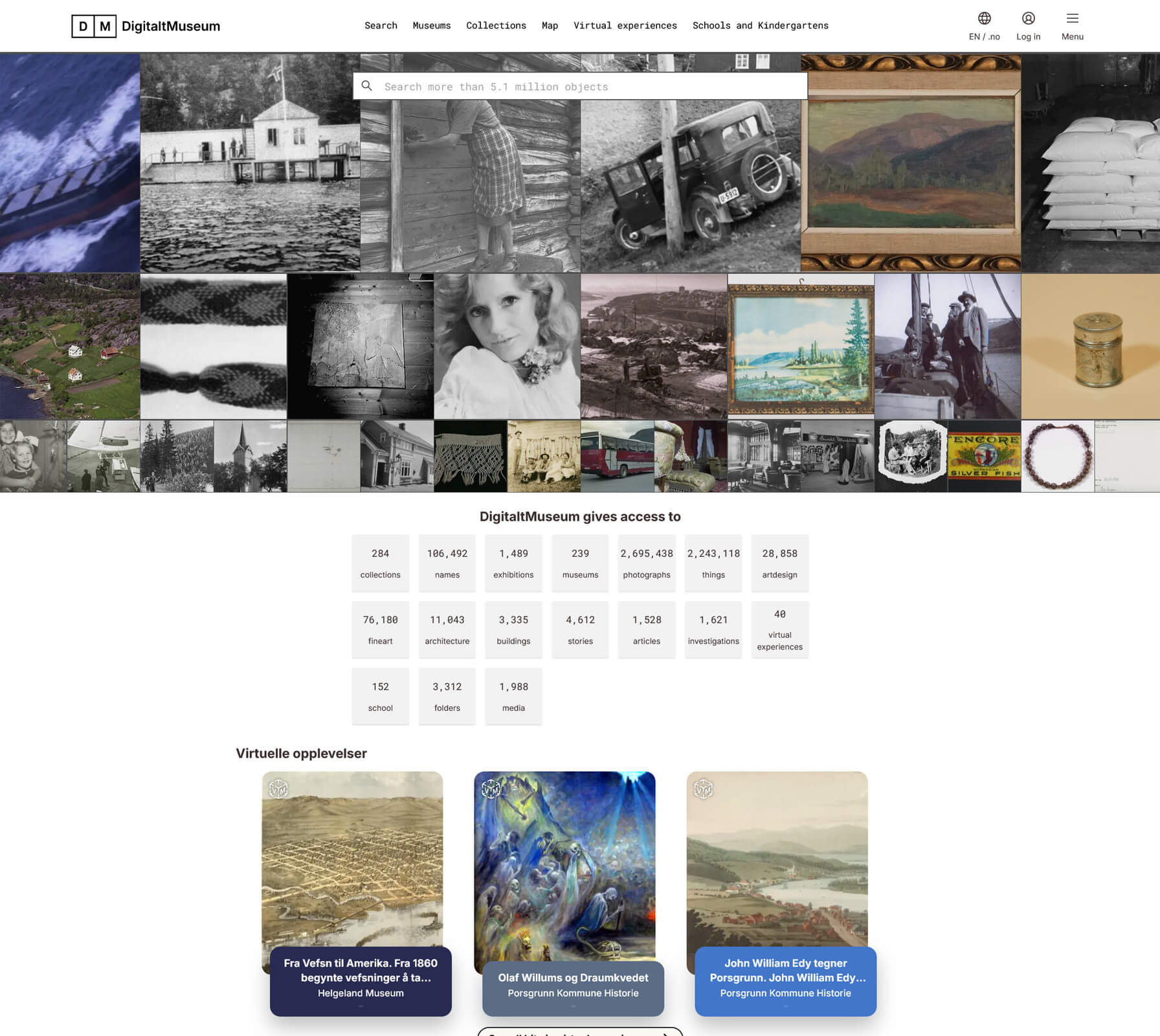
DigitaltMuseum aggregates digitized collections from museums across Norway and Sweden, including photographs, artifacts, design objects, and works of art. Many items carry public domain or similarly permissive rights statements that allow wide reuse, although you should always check the rights field on each record. The service is operated by KulturIT in collaboration with participating Nordic museums that manage their own content and metadata.

Visit site DigitaltMuseum
20

Flickr Commons

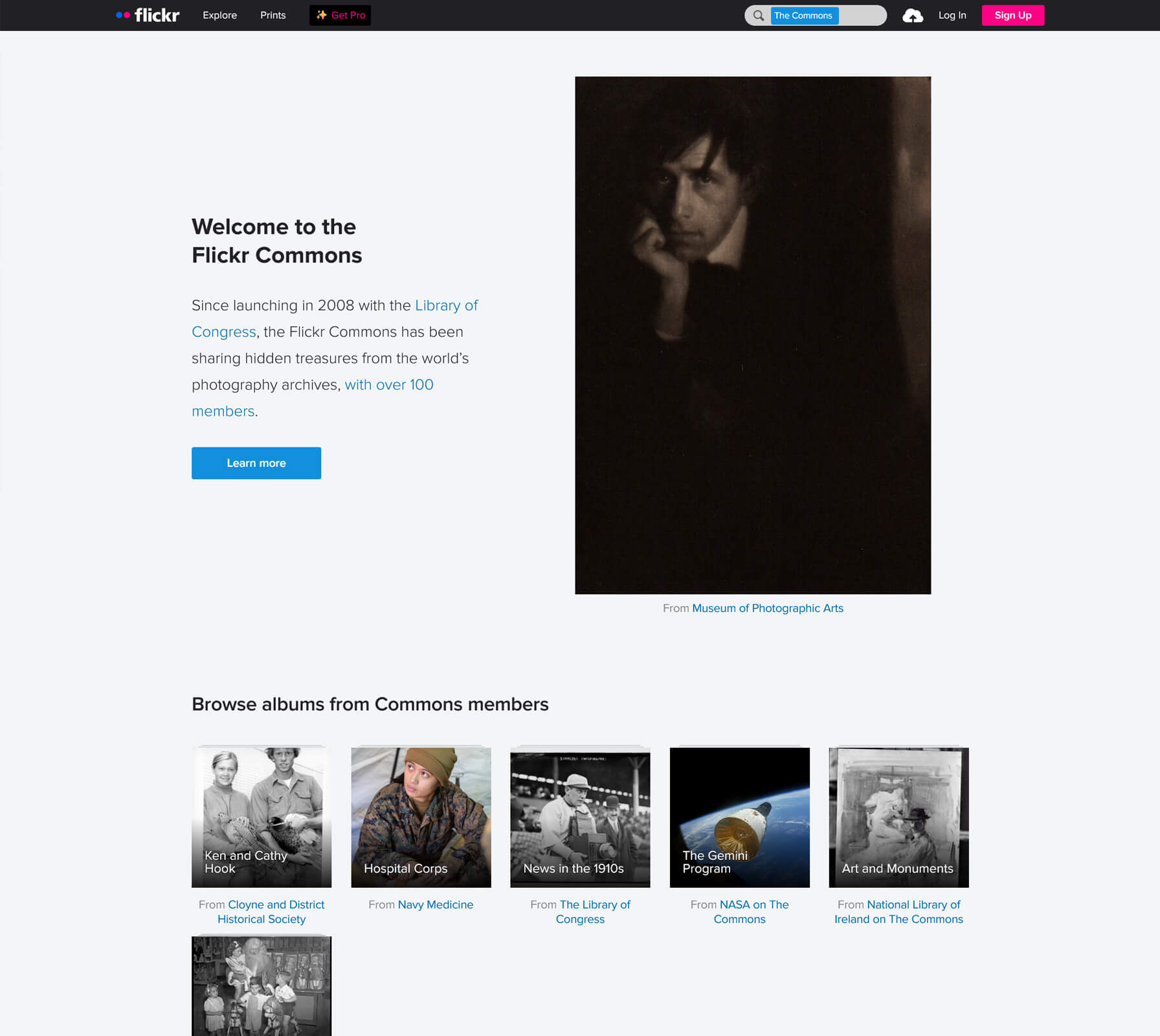
Flickr Commons hosts historical photography from more than one hundred libraries, archives, and museums that want to share public photo collections. The goal is to increase access to publicly held images and invite the public to tag and describe them, with many records labeled as having no known copyright restrictions. The Commons program was launched by Flickr in partnership with the Library of Congress and is now supported by the nonprofit Flickr Foundation together with participating institutions.

Visit site Flickr Commons
21

Pixabay

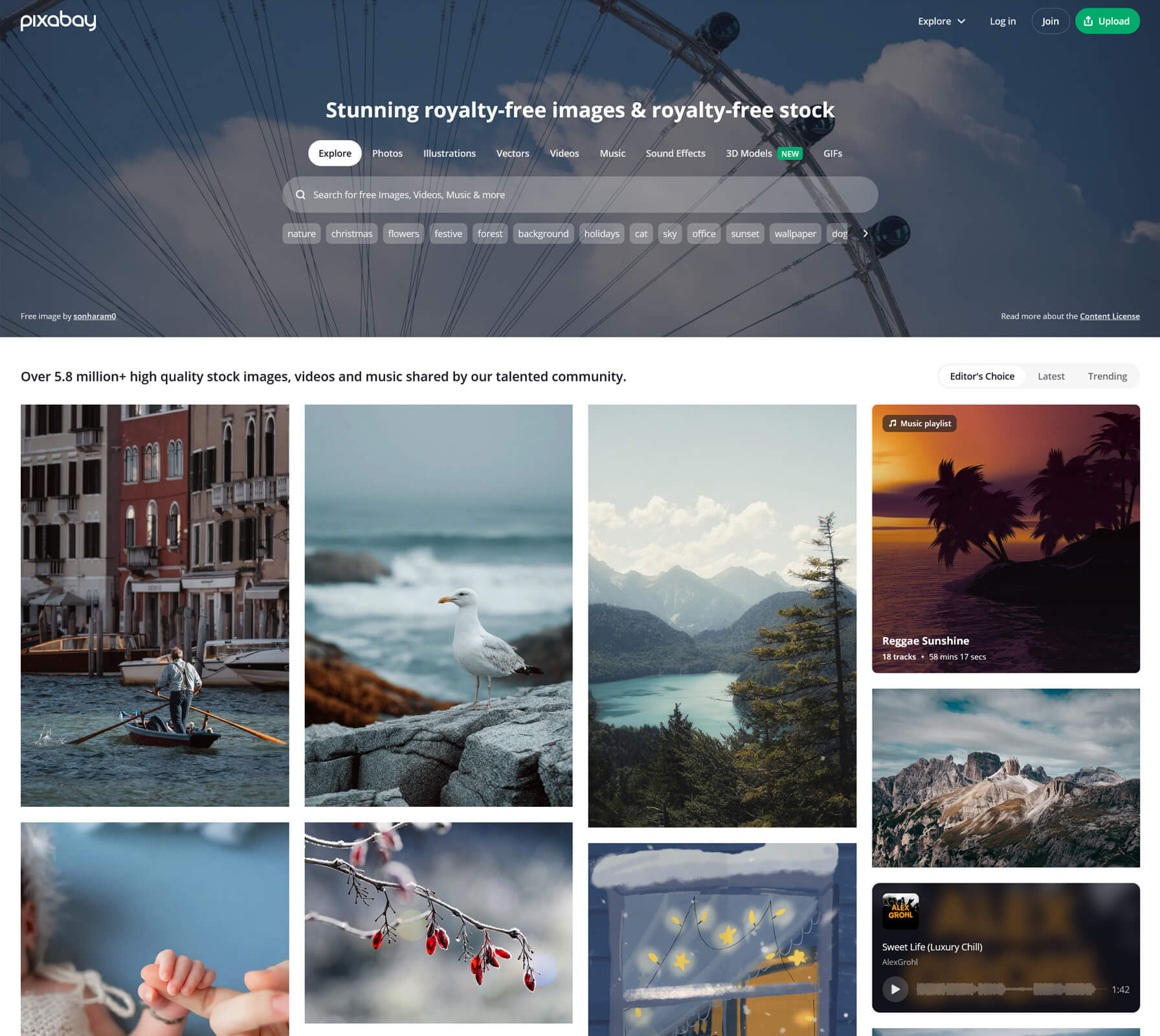
Pixabay is a very large free stock media library that now contains more than five million photos, illustrations, vectors, videos, and audio tracks. Although the site originally used the CC0 public domain dedication, most current material is available under a custom Pixabay Content License that still allows broad commercial reuse but restricts reselling unaltered files and certain sensitive uses. Pixabay operates as a brand of Canva Germany GmbH after being acquired by Canva, while continuing to run with its own site and community.

Visit site Pixabay
22

Unsplash

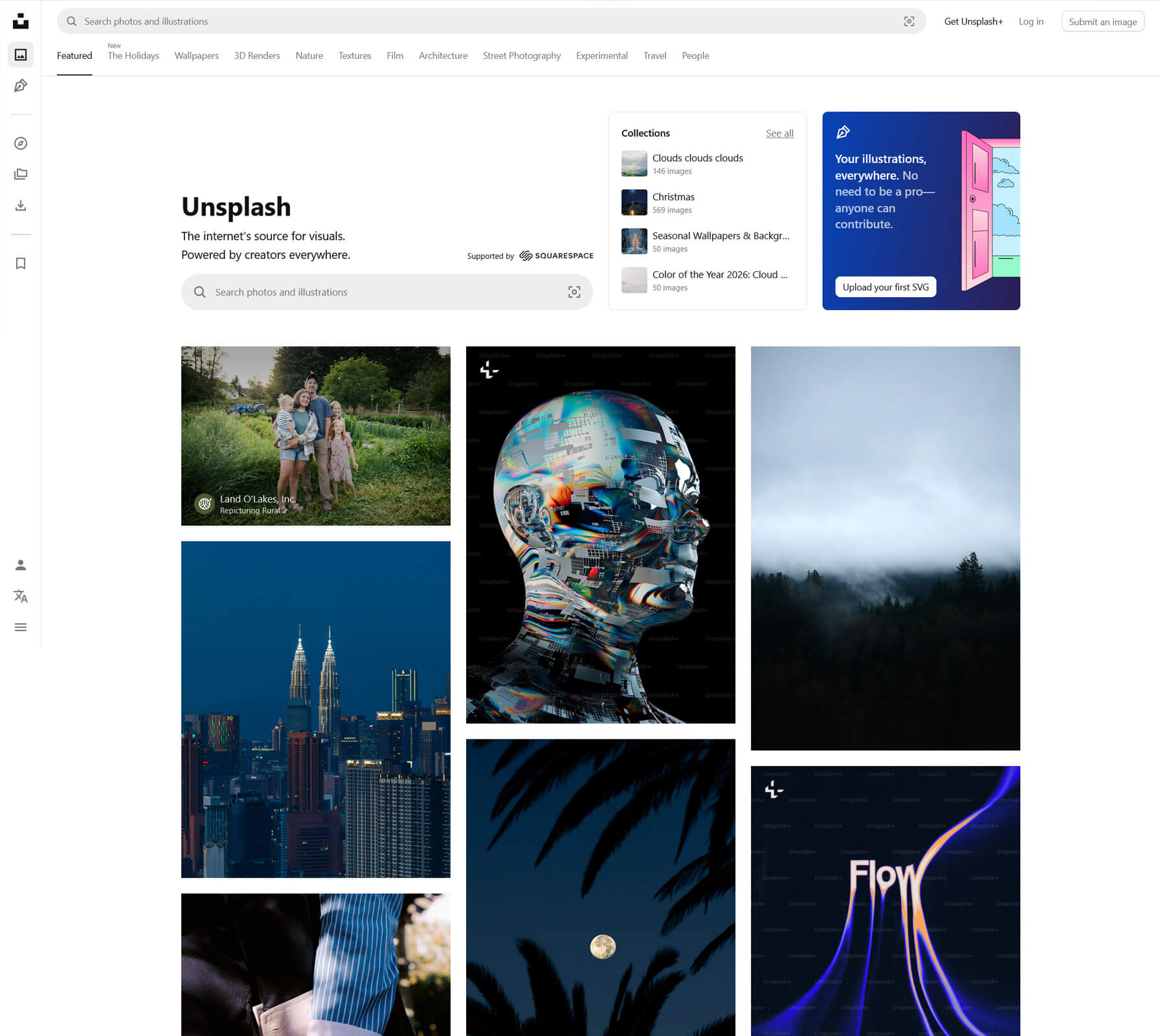
Unsplash provides a huge library of high quality, curated photographs contributed by a large community of photographers and downloadable for free. Its custom Unsplash License allows copying, modifying, and using the photos commercially, with limitations on selling unaltered copies or building a competing stock service. Unsplash continues to operate as a standalone brand and platform but has been a subsidiary of Getty Images since its acquisition in 2021.

Visit site Unsplash

Understanding “Free”: Demystifying Public Domain and Creative Commons Licenses

Before diving into the resources, it’s crucial to understand the legal frameworks that make these images available. The term “free” can be nuanced, and knowing the difference between various licenses is key to using them correctly and with confidence.

What Exactly is the Public Domain?

An image in the public domain is a creative work that is no longer, or never was, under copyright protection. This can happen in several ways: the copyright has expired (typically many decades after the creator’s death), the creator explicitly forfeited their rights, or the work was created by a U.S. government agency. Public domain images are truly free for anyone to use, modify, and distribute for any purpose, commercial or non-commercial, without needing permission or providing attribution.

Navigating Creative Commons Licenses, Especially CC0

Creative Commons is a non-profit organization that provides a suite of standardized licenses to help creators grant permissions for their work. While there are several types of Creative Commons licenses, the most important for free-use content is the CC0 license, also known as “No Rights Reserved.” When a photographer or artist applies a CC0 license to their work, they are effectively dedicating it to the public domain, waiving all their copyright and related rights. This allows for maximum freedom, mirroring the permissions of a traditional public domain work.

Public Domain vs. Royalty-Free Images: Key Differences for Users

It’s easy to confuse “public domain” with “royalty-free,” but they are fundamentally different. Public domain images are completely free of copyright restrictions. Royalty-free images, often found on paid stock photo sites, are not free of charge. You typically pay a one-time fee to acquire a license that allows you to use the image multiple times without paying additional royalties. However, this license still comes with specific terms and conditions set by the provider, unlike the unrestricted freedom of the public domain.

The Critical “License Page”: Your First Stop on Any Website

Before downloading any image, always locate and review the website’s license page or terms of service. This page is the definitive source of truth regarding how the images can be used. Reputable sites make this information clear and easy to find. Taking a moment to verify the license—confirming it’s a CC0 license or that the images are explicitly in the public domain—is a critical step to ensure full compliance.

Navigating Licenses and Usage: Best Practices to Ensure Compliance

While public domain images offer incredible freedom, adopting a few best practices ensures you use them respectfully and responsibly. Though not legally required, providing attribution to the photographer or institution is a thoughtful gesture that honors their work. It also adds credibility to your content by showing where your visuals came from. Always double-check that an image is truly in the public domain, especially when sourcing from less-vetted websites. Finally, be mindful of context. An image that is free of copyright restrictions may still contain recognizable people or private property, which could require additional permissions for commercial use.

Conclusion

The world of free public domain images is a vast and empowering ecosystem for creators. By understanding the fundamentals of public domain and the CC0 license, you can confidently tap into millions of high-quality visuals without the financial burden or legal anxiety associated with traditional stock photos. Platforms like Pixabay, Unsplash, and the open access collections from world-class museums provide an endless supply of creative fuel for your content.

To move forward, start by bookmarking two or three of the resources mentioned in this guide that best fit your typical needs. The next time you create a blog post or social media update, challenge yourself to source all your visuals from these copyright-free websites. Practice using advanced search filters to refine your results and always take a moment to double-check the license. By integrating these powerful resources and best practices into your workflow, you can elevate your content, engage your audience, and create more freely than ever before.